
The 5000/1 Team
Football 101: How to cause an upset

How Leicester City Caused Football’s Greatest Upset
A deep dive into the 2015-16 season that defied every rule and broke every expectation.
April 2015. King Power Stadium. Leicester City needed a miracle. Not the kind of miracle that would make headlines across the world. Not the kind that would be studied in tactical seminars or celebrated in documentaries for decades. Just the small, desperate miracle of survival. The Foxes sat bottom of the Premier League table with nine games remaining, seven points from safety. Bookmakers offered 2000/1 odds on relegation. The club that had risen from League One just five years earlier seemed destined to tumble back down.
Then something shifted. Leicester won seven of those final nine matches. They climbed from the abyss with a relentlessness that seemed to come from nowhere and everywhere at once. Survival felt like a trophy. Manager Nigel Pearson, architect of the escape, was sacked that summer anyway. The club turned to Claudio Ranieri, a journeyman manager whose most recent job failed with Greece’s national team. The 63-year-old Italian, known for his kindness and his near-misses, arrived to a chorus of skepticism.
As the 2015-16 season approached, bookmakers set Leicester’s title odds at 5000/1. Most pundits predicted another relegation battle. Gary Lineker, Leicester’s most famous son, promised to present Match of the Day in his underwear if his hometown club won the league. It seemed a safe bet. Nobody could have imagined what was about to unfold.
Claudio Ranieri arrived at Leicester without fanfare. His CV was respectable but not spectacular—a nearly man who had come close with Roma, Chelsea, and Monaco but never quite delivered the ultimate prize. The English media dubbed him “The Tinkerman” for his tendency to rotate lineups and formations. Some questioned whether a manager who couldn’t win Serie A with Roma’s squad could handle a relegation-threatened Leicester side. But Ranieri understood something fundamental: he didn’t need to reinvent this team. The great escape of the previous spring hadn’t been luck. Leicester had discovered an identity in those desperate weeks—direct, aggressive, built on pace and power rather than possession and patience. Where other managers might have imposed a new philosophy, Ranieri recognized genius in simplicity.
His tactical approach was brutally effective. Leicester would sit deep in a compact 4-4-2, absorbing pressure with disciplined defensive shape. The midfield four worked with tireless synchronization, pressing in coordinated waves. And when they won the ball, the transition was explosive. N’Golo Kanté and Danny Drinkwater would spring it forward to Riyad Mahrez and Marc Albrighton on the wings, who would then feed Jamie Vardy’s relentless runs in behind. It wasn’t beautiful football by the standards of Pep Guardiola or Arsène Wenger. It was effective football. Honest football. Football that turned Leicester’s limitations into weapons.
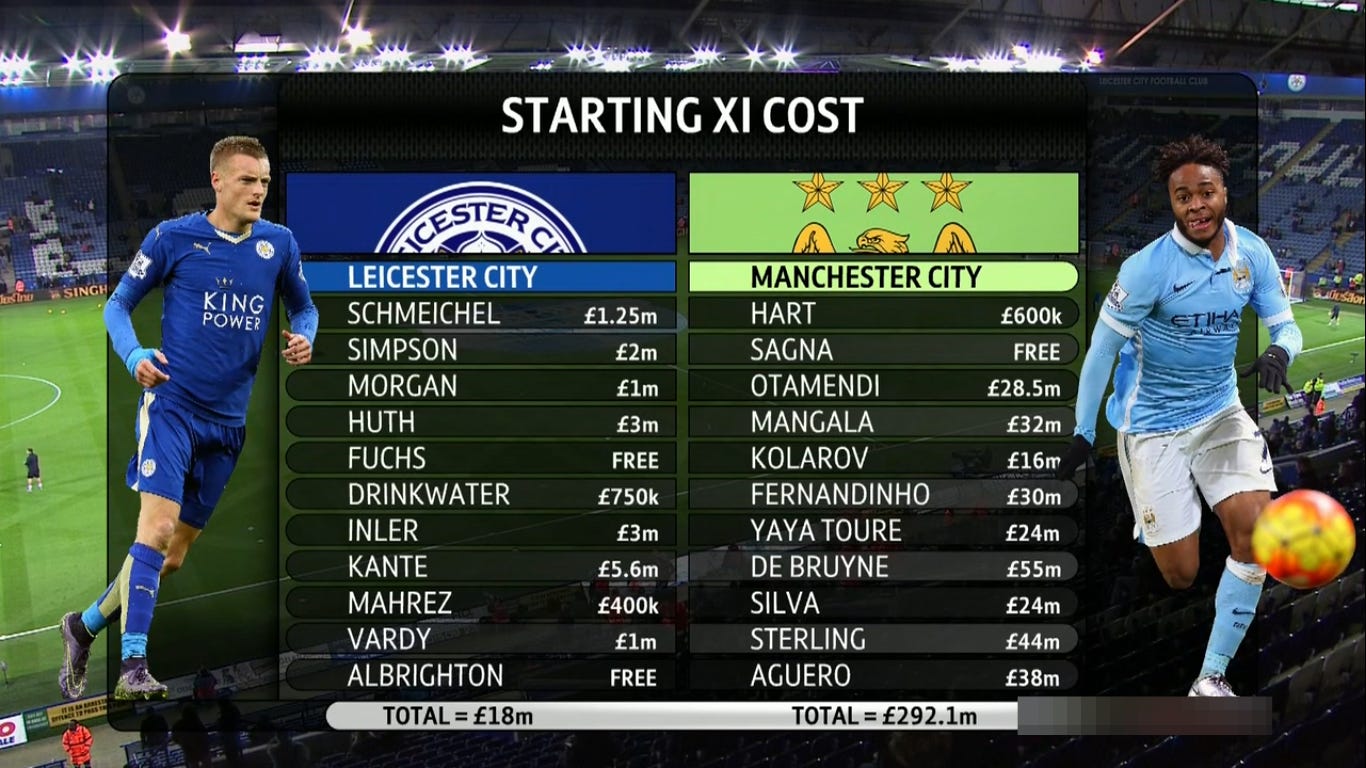
Leicester’s squad was assembled for less than Manchester City paid for Raheem Sterling alone that summer. But beneath the modest price tags was shrewd recruitment that would make the analytics departments of billion-pound clubs weep with envy. N’Golo Kanté arrived from Caen for £5.6 million. The diminutive Frenchman had been playing in Ligue 2 two years earlier. He was quiet, unassuming, almost invisible off the pitch. On it, he was covering more ground than seemed physically possible, reading the game with great anticipation, snuffing out attacks before they materialized. There’s a joke that became common that season: 70% of the Earth is covered by water, the rest by N’Golo Kanté.
Riyad Mahrez came from Le Havre for £400,000 in 2014. The Algerian winger possessed the kind of close control and creativity that usually costs tens of millions. He could glide past defenders, deliver crosses with surgical precision, and score from impossible angles. He played like a man determined to prove every scout who overlooked him catastrophically wrong. Jamie Vardy had been playing non-league football for Fleetwood Town just four years earlier, working in a factory to supplement his income. Leicester paid £1 million for him in 2012—a gamble on raw pace and work rate. By 2015, he’d become the perfect striker for Ranieri’s system: relentless in the press, devastating on the counter, and absolutely fearless.
Then there was Kasper Schmeichel, son of the legendary Peter, who’d spent years trying to escape his father’s shadow. Wes Morgan and Robert Huth, center-backs who defended like they were broke. Danny Drinkwater, the industrious midfielder who Manchester United’s academy had released, now orchestrates Leicester's midfield. These were players who were overlooked, underestimated, or dismissed. Leicester gave them a platform. They seized it with both hands.
Leicester opened the season with a 4-2 victory over Sunderland. Mahrez scored twice. It was an entertaining start, but nothing that suggested what was coming. What mattered more was the manner—the organization, the speed of transitions, the clinical finishing. They drew with Tottenham. Beat West Ham. By early September, they sat sixth in the table, level on points with Manchester City and Manchester United. It was early, of course. Too early to mean anything. Leicester were having a nice start before the inevitable regression to the mean.
Except the regression never came.
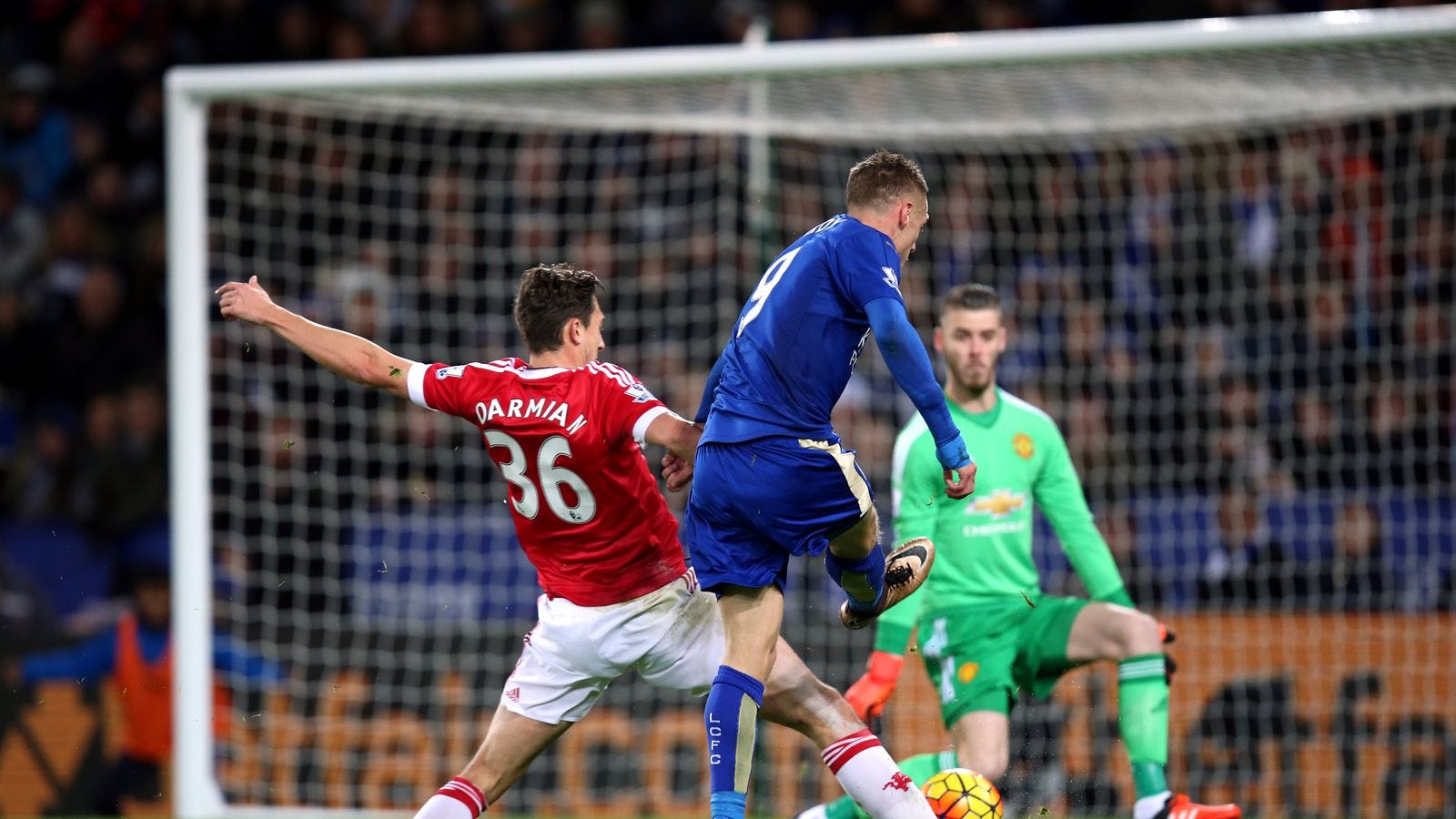
Jamie Vardy couldn’t top scoring. More than that, he couldn’t top scoring in consecutive games. The record for goals in consecutive Premier League matches was 10, set by Ruud van Nistelrooy in 2003. It seemed untouchable—the kind of record that belonged to world-class strikers at super clubs, not former factory workers at newly promoted teams. Vardy equaled it against Manchester United on November 28. Leicester drew 1-1; Vardy's goal was a perfect encapsulation of their approach—a defensive turnover, a quick transition, a perfectly weighted through ball from Christian Fuchs, and Vardy doing the rest. He celebrated with his trademark hand gesture, arms wide, soaking in the adulation.
By the end of November, Leicester sat top of the table. Arsenal, Manchester City, and Manchester United lurked close behind, but the Foxes had the summit. Pundits still predicted the collapse. The packed schedule would reveal their lack of depth. The pressure would crack them. Leicester kept winning.
The Christmas period in English football is brutal. Matches come every two or three days, injuries accumulate, and squad depth becomes crucial. Leicester's suit was thin. They had no European football to manage, which helped, but they couldn't afford to lose key players to injury. Ranieri rotated sparingly, trusting his core group. Kanté and Drinkwater played nearly every minute. Vardy and Mahrez were ever-present. The back four became a wall. And somehow, Leicester kept grinding out results.
They beat Chelsea 2-1 at the King Power, former champions humbled by the upstarts. Drew with Everton. Beat Liverpool 2-0, with Vardy scoring both goals in a devastating counter-attacking display that left Jürgen Klopp's team chasing shadows. By February, the narrative began to shift. This wasn't a hot streak anymore. This wasn't a beginner's mistake or a statistical anomaly. Leicester were 5 points clear at the top. They'd played 25 games and showed no signs of collapse. Ranieri still insisted they were fighting for Champions League qualification, not the title. But everyone could see the truth forming. Maybe, just maybe, this could actually happen.
What made Leicester so difficult to beat was their tactical discipline married to individual brilliance. Ranieri had created a system that maximized every player's strengths while hiding weaknesses. The defensive organization was superb. Morgan and Huth were physical, dominant in the air, and committed to every challenge. Schmeichel commanded his area with authority. The full-backs, Danny Simpson and Christian Fuchs, provided width but never abandoned their defensive duties. In midfield, Kanté was the fulcrum. His positioning, stamina, and reading of the game allowed Drinkwater more freedom to distribute and occasionally push forward. Analysts later showed Kanté covered more ground per game than any other Premier League player. He made tackles and interceptions in areas most defensive midfielders never reached.
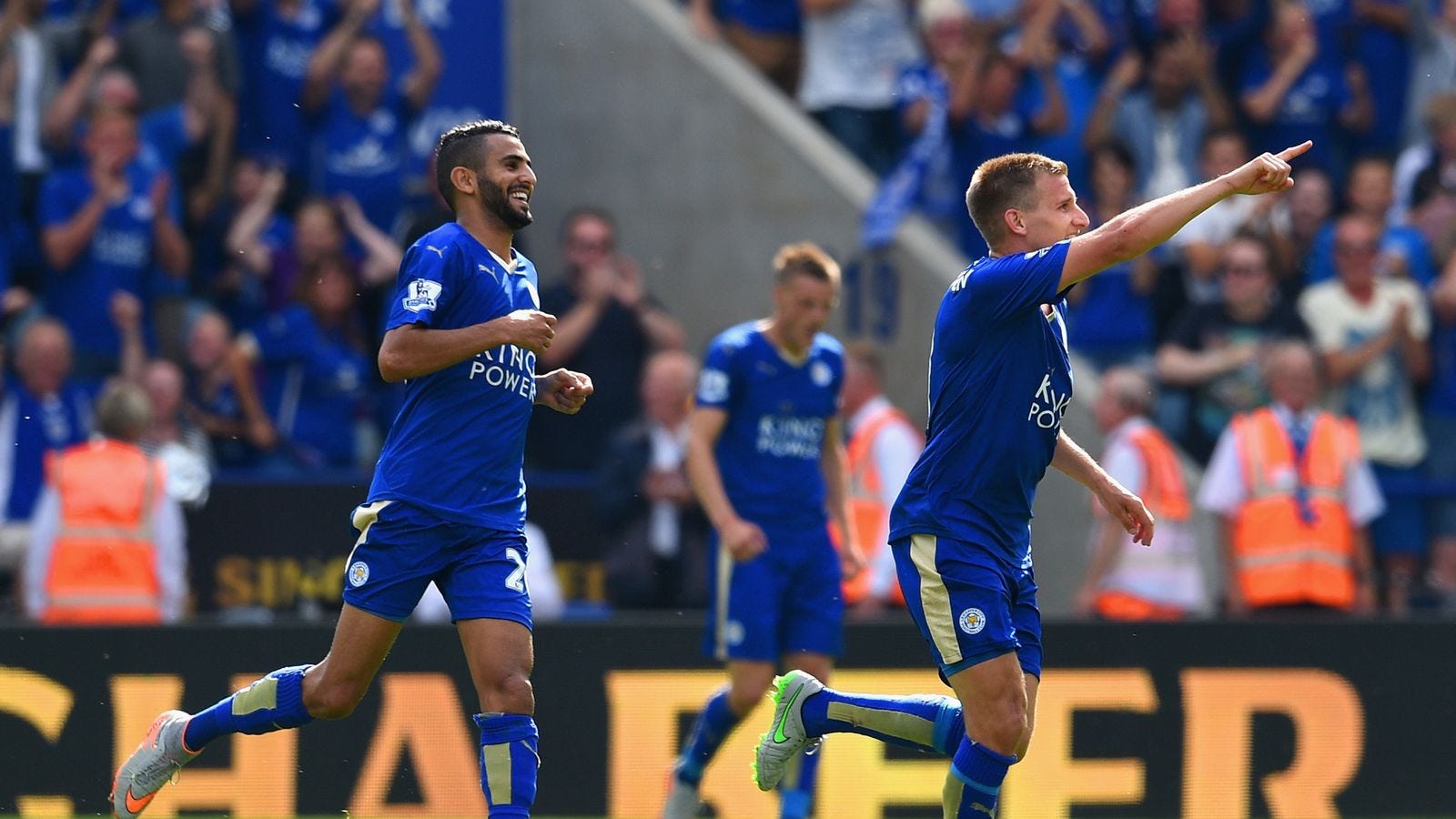
The wingers, Mahrez and Albrighton, were the crucial link. Mahrez provided moments of magic—dribbling in tight spaces, creating chances from nothing, scoring wonder goals. Albrighton was the workhorse, tracking back relentlessly, delivering dangerous crosses, pressing with manic intensity. And Vardy was the trigger. His pace forced defenders to drop deep, creating space for Mahrez to exploit. His work rate disrupted the opposition's midfield play. His finishing was clinical. He scored 25 league goals that season—a phenomenal return for a striker who cost £1 million and was playing non-league football five years earlier. But tactics alone don't win titles. Leicester had something else: belief, unity, and an absolute refusal to accept they diddidn'tlong at the top.
As Leicester entered the final stretch, their remaining rivals faltered one by one. Arsenal, perpetual nearly-men, began their annual spring collapse. Tottenham, young and energetic under Mauricio Pochettino, remained close but had never won the Premier League and seemed weighted by that history. Manchester City had its own inconsistencies. Manchester United were rebuilding under Louis van Gaal and out of contention. Leicester just kept winning. The scorelines were rarely emphatic, but the results were relentless.
Leicester drew 2-2 with West Ham on April 17. Tottenham won the same day, cutting the gap to 5 points with four games remaining. Suddenly, the pressure was back. Could Leicester hold on? Would they crack? They traveled to Sunderland needing a win to restore breathing room. Vardy was suspended. The circumstances seemed designed for disappointment. Instead, Leonardo Ulloa scored the only goal. Leicester won 1-0, their defensive resilience shining through. The gap was 7 points again with three matches left. Then came the moment that will live forever in Leicester folklore.
Leicester didn’t play on May 2. They had drawn 1-1 with Manchester United the day before, Wes Morgan's header salvaging a point. Now they gathered at Vardy's house to watch Tottenham play Chelsea at Stamford Bridge. If Tottenham won, they'd keep the title race alive, at least mathematically. If they didn't, Leicester were champions. The match was feisty, physical, and tense. Tottenham took a 2-0 lead. Leicester’s players watched with mounting anxiety. Then, Gary Cahill pulled one back for Chelsea in the 58th minute. Hope flickered. In the 83rd minute, Hazard equalized. 2-2. Final whistle.
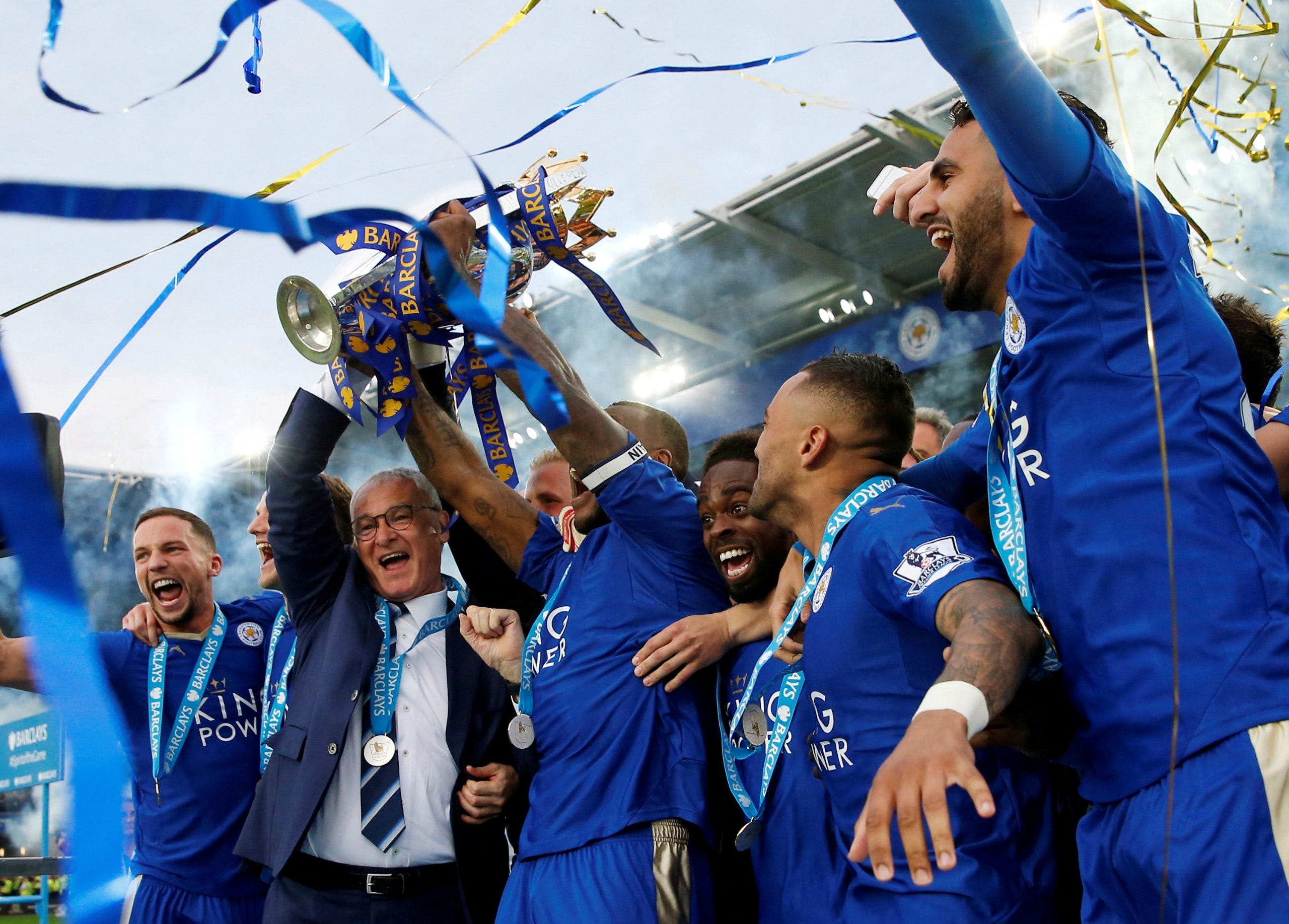
Leicester City were Premier League champions.
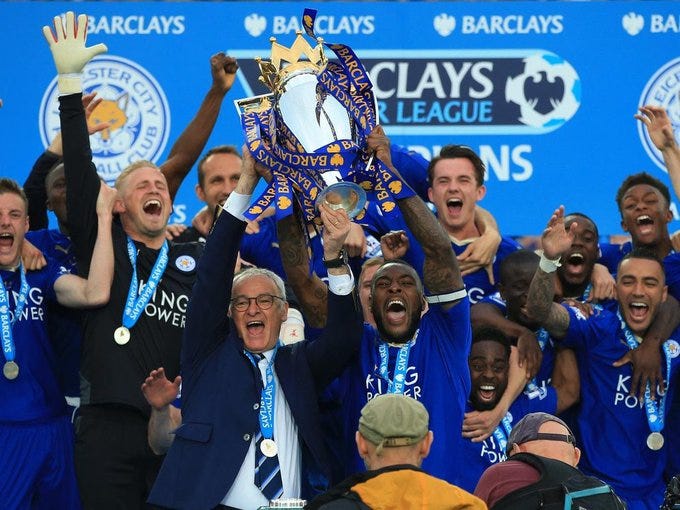
The scenes were pure, unfiltered joy. Vardy's house erupted. Players embraced, tears streaming down their faces. Across Leicester, the city went wild. Fireworks lit the sky. Strangers hugged in the streets. Kasper Schmeichel, who'd spent his career trying to step out of his father's shadow, had just matched him—both Schmeichels now Premier League champions. Ranieri, the Tinkerman, the nearly man, the manager mocked for being too nice, too old, too cautious, had delivered the impossible. His face, when he learned of the result, showed pure disbelief mixed with overwhelming emotion.
Leicester’s title wasn’t unlikely—it was statistically absurd. Various analysts calculated the odds of it happening again at somewhere between 1-in-10,000 and 1-in-1,000,000. To understand how it happened, you need to understand the confluence of factors that all aligned perfectly. This wasn't a collection of stars—it was a unit. Players genuinely liked each other. There were no egos demanding special treatment, no factions in the dressing room, no players angling for moves to bigger clubs mid-season.
While rivals juggled Champions League and Europa League commitments, Leicester focused solely on the Premier League. They were fresher in the crucial final months. Ranieri could field his best eleven almost every week. His system was simple but perfectly suited to his players. There was no confusion, no overthinking. Everyone knew their role. Execution was everything. When systems needed supplementing, Mahrez would produce magic. Schmeichel would make impossible saves. Vardy would score from half-chances. Great teams need great players producing great moments. Leicester had them. Arsenal collapsed. City were inconsistent. United was rebuilding. Chelsea had imploded under José Mourinho. This wasn't a weak season—but the expected powerhouses all stumbled.
At some point, usually around February, Leicester stopped being surprised they were winning. They started expecting it. That shift in mentality—from plucky underdogs to genuine contenders to inevitable champions—was crucial. The belief became contagious, spreading from the dressing room to the stands to the entire city. When you believe you can't, sometimes you do. Leicester's title changed English football. It reminded everyone that the sport could still produce miracles, that money didn't guarantee success, and that underdogs could still slay giants. For one season, football felt magical again. The following year, Leicester struggled and ultimately sacked Ranieri with the club hovering above the relegation zone—a cruel end to the fairytale. The squad gradually dispersed. Kanté moved to Chelsea for £32 million and won another title. Mahrez eventually joined Manchester City for £60 million. Vardy stayed, becoming a Leicester legend.
But nothing could take away May 2, 2016. Nothing could erase the season when 5000/1 odds became reality. When Claudio Ranieri, the perennial nearly-man, became a champion. When Jamie Vardy, who had been stacking shelves at age 23, lifted the Premier League trophy. When a team assembled for the price of one world-class player, it conquered the richest league in the world.
What can we learn from Leicester's miracle season? Football, at its heart, is still unpredictable. No amount of analytics, money, or prestige can eliminate the human elements—belief, chemistry, determination, timing. Systems matter, but so do stories. The narrative of underdogs banding together, of players with something to prove, of a manager dismissed as past it—these narratives can become reality when paired with talent and opportunity.
Leicester's was a perfect storm of factors that may never align again. The Premier League has only become more expensive, more dominated by oil-rich owners and billion-pound squads. The gap between the elite and the rest has widened, making Leicester's achievement even more precious. They proved that once, just once, everything could fall right for a team that had no business competing with giants. They proved that miracles still exist in football.
And somewhere in Leicester, in pubs and homes and on the streets, fans still talk about that season with tears in their eyes and wonder in their voices. Because they were there, they witnessed the impossible. 5000/1. Champions. Forever.
What made Leicester's achievement possible? Was it genius tactics or something more intangible? Could it happen again in this modern financial landscape? And what does this story tell us about why we love this sport? Share your thoughts in the comments below.
If you love the hidden stories of football, subscribe for more in-depth explorations of the beautiful game!
— The Protean Chronicles
this was genuinely a beautiful read.
i also read somewhere that someone placed a bet on leicester winning the league and won $250,000 from just $50.
Leicester's achievement was one in a million, but I don't think that sort of thing is going to happen in this era.